
Shoot, Don't Shoot: Why Holding Back Is a Skill
The hardest part of a decision drill is the shot you don't take. Here is what stopping a movement asks of your brain.
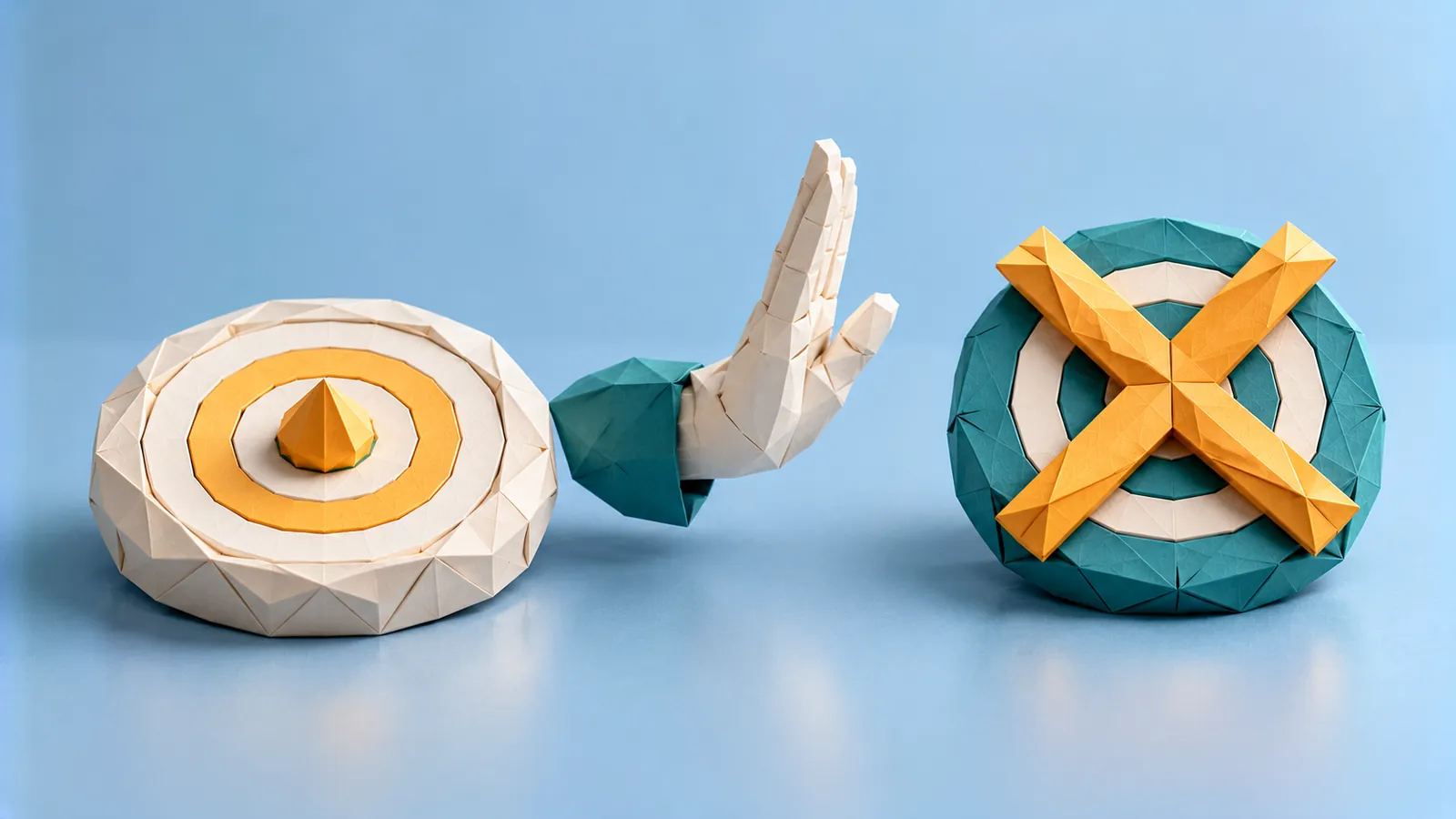
In a shoot or don't-shoot drill, some targets must be hit and others must be left alone. Most people find the "don't" part much harder than the "shoot" part.
That is not a lack of skill. Stopping an action you have already started is a separate ability, and psychologists have studied it for decades.
Starting is easy, stopping is hard
When a target appears, your brain prepares a response almost immediately. If you then realise the target is one to avoid, that prepared response has to be cancelled. This cancelling is called response inhibition.
In the classic stop-signal task, people respond quickly to a signal, but on some trials a second signal tells them to stop. Gordon Logan and William Cowan described this in 1984 as a race: the "go" process and the "stop" process run at the same time, and whichever finishes first wins. If the stop signal comes too late, the go process wins and you respond anyway.
Why speed makes it harder
The faster a drill runs, the less time the stop process has. Push for speed and you will hit more of the targets you should avoid. Slow down and you hit fewer of them, but you also respond more slowly to the targets you should hit. Good performance means finding a pace where both stay acceptable.
The same brake, used by your eyes
Our anti-saccade exercise asks for the same thing with your eyes. A target appears, and you must look away from it instead of at it. Your eyes want to jump to anything new, so this takes deliberate control. It uses a similar brake to the one in shoot or don't-shoot drills, just with a different part of the body.
What practice can change
People improve at stop-signal and shoot or don't-shoot tasks with practice: they learn the rules, recognise the targets faster and settle on a better pace. Frederick Verbruggen and Gordon Logan's 2008 review describes how these tasks are used to measure inhibition.
What is not established is that training this kind of task improves self-control or decision-making in real life. We describe it as practice at this task, not a way to change your behaviour.
Tips for the drill
Look at the whole target before you commit, especially early on. Keep your finger relaxed rather than hovering tensely over the button. Accept a slightly slower pace at first, then speed up only while your mistakes stay low.
Not medical advice. Stop if you feel dizzy, nauseous or strained.
Sources
- Logan & Cowan (1984): On the ability to inhibit thought and action, Psychological Review
- Verbruggen & Logan (2008): Response inhibition in the stop-signal paradigm, Trends in Cognitive Sciences
Not medical advice. Stop if you feel dizzy, nauseous or strained.