
Aim Target Test: Speed, Accuracy and Fitts's Law
Why small, far targets take longer to hit, and what a click-the-target test really measures.
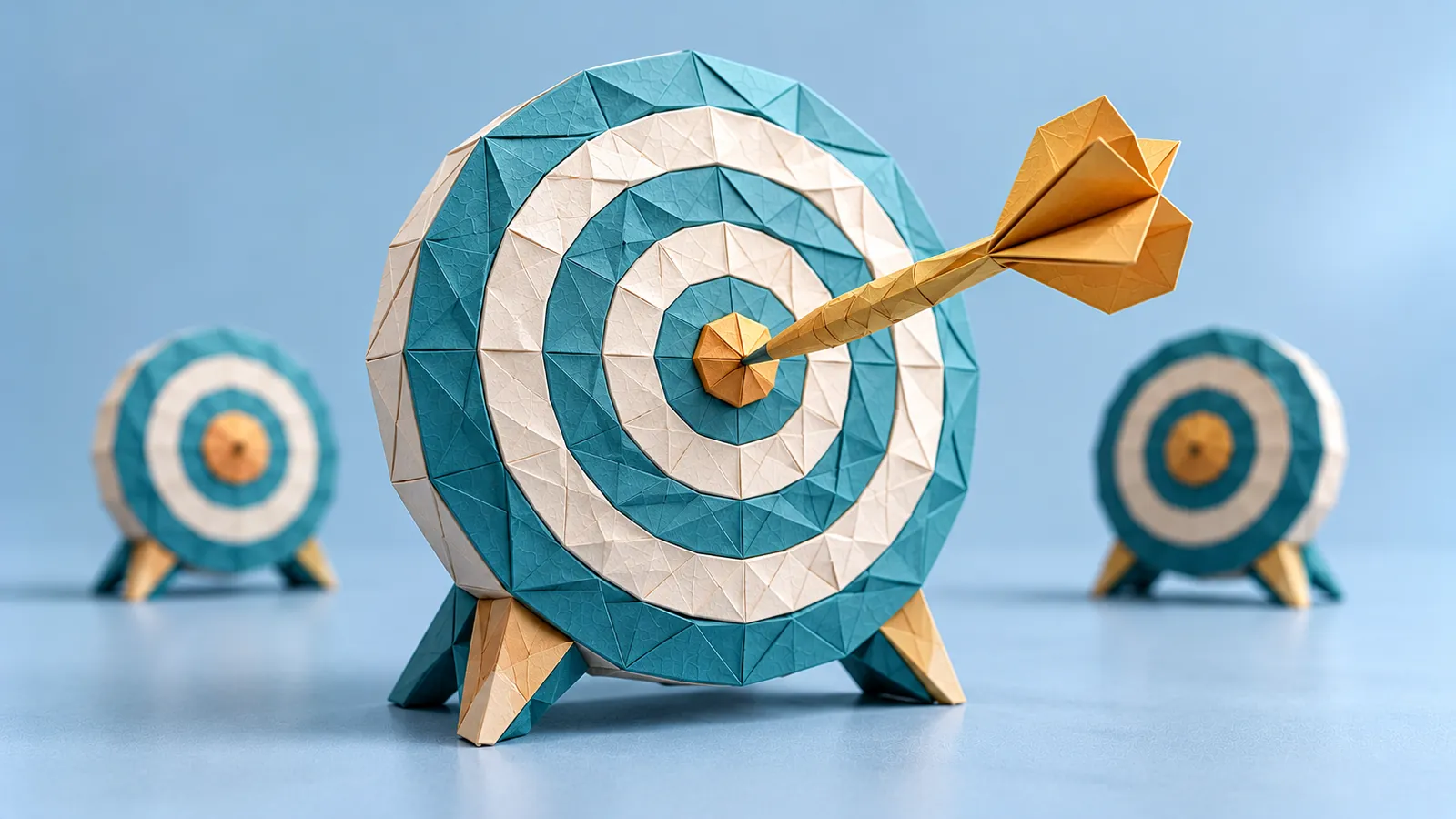
Aim tests look like games, but they measure something scientists have studied since the 1950s: how quickly and accurately you can move to a target.
How to play
Click or tap the targets as fast as you can. Level 1 shows one target at a time, level 2 shows two and level 3 shows three. Each level lasts 40 seconds, and a new target appears after each hit. You see your hits and average time per hit for each level.
Where the idea comes from
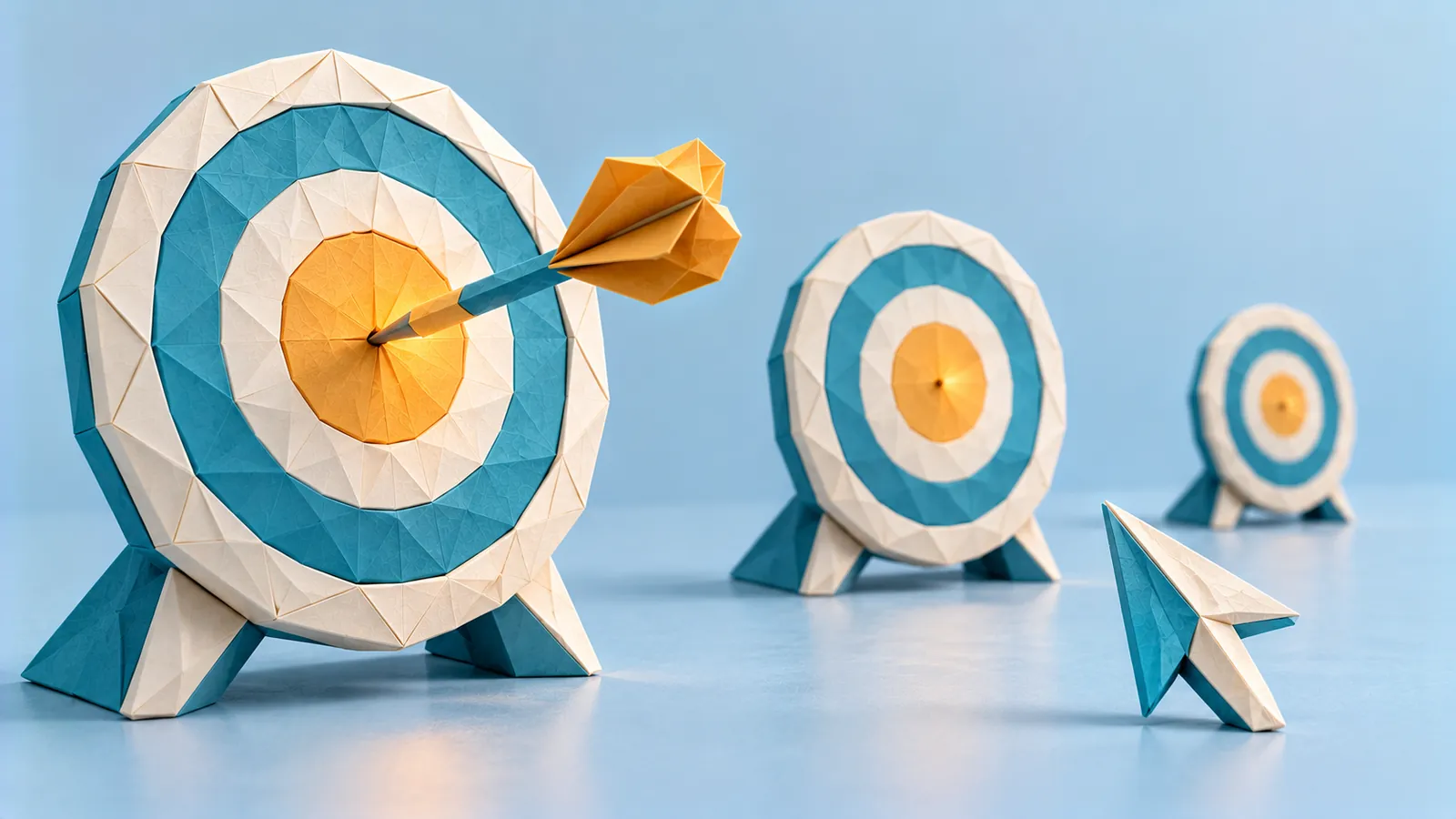
In 1954, Paul Fitts showed that the time to hit a target depends on two things: how far away it is and how big it is. Far, small targets take longer; near, big ones are quick. This rule, now called Fitts's law, is still used to design buttons, menus and game interfaces.
What the test uses
Your eyes find the target, your brain plans the movement, and your hand makes a fast first move followed by small corrections. With more targets on screen, you also have to choose which one to go for next, which adds decision time.
What your score means
Your hits and average time show how you did today, on this device. Mouse, trackpad and touchscreen give very different results, so compare like with like.
A worked example
On level 1 you might hit 50 targets in 40 seconds, about 0.8 seconds each. On level 3, with three targets on screen, your hits often go up because the next target is already visible, but you may also see more misses as you rush. Compare your time per hit and misses across the three levels to see where speed starts costing you accuracy.
Common mistakes
Gripping the mouse tightly makes small corrections harder. Chasing speed from the first second usually adds misses. Changing your sensitivity often means your hand never settles on one movement. And on a trackpad or touchscreen, expect very different numbers from a mouse.
Questions people ask
What sensitivity should I use? Whatever you use in the game you care about, so the movement feels familiar.
Should I aim for speed or accuracy? Build accuracy at a comfortable speed first, then push speed only while accuracy holds.
Will this make me better in my game? You will get better at this task. Carry-over to a specific game depends on that game and has not been shown.
Can you improve?
Yes, at this task: people get faster and more accurate with practice, mostly through smoother, better-planned movements. Whether that carries over to a particular game is less clear, because every game has its own sensitivity, targets and movement. Not medical advice: take breaks and stop if your hand or wrist hurts.
Sources
Not medical advice. Stop if you feel dizzy, nauseous or strained.