
Rhythm Copy: How Your Brain Keeps Time
Copying a beat looks easy until you try it. What timing tasks measure, and why most people tap a little early.

Clapping along to music feels effortless. But copying a new rhythm exactly, with the same gaps between beats, is a real test of timing. Rhythm Copy asks you to do just that.
How to play
Turn the sound on. A rhythm beeps and pulses on screen. When it is your turn, tap it back with the same timing using Space, a click or a tap. Each level adds beats, so the pattern gets longer and harder to hold.
Where the idea comes from
Scientists study timing with tapping tasks, sometimes called sensorimotor synchronisation: tapping in time with a beat, or reproducing a rhythm from memory. Bruno Repp's widely cited review collected decades of these experiments.
One of the best-known findings: when people tap along to a steady beat, they tend to tap slightly before it, often by a few tens of milliseconds, without noticing. Musicians are usually more consistent, but they show it too.
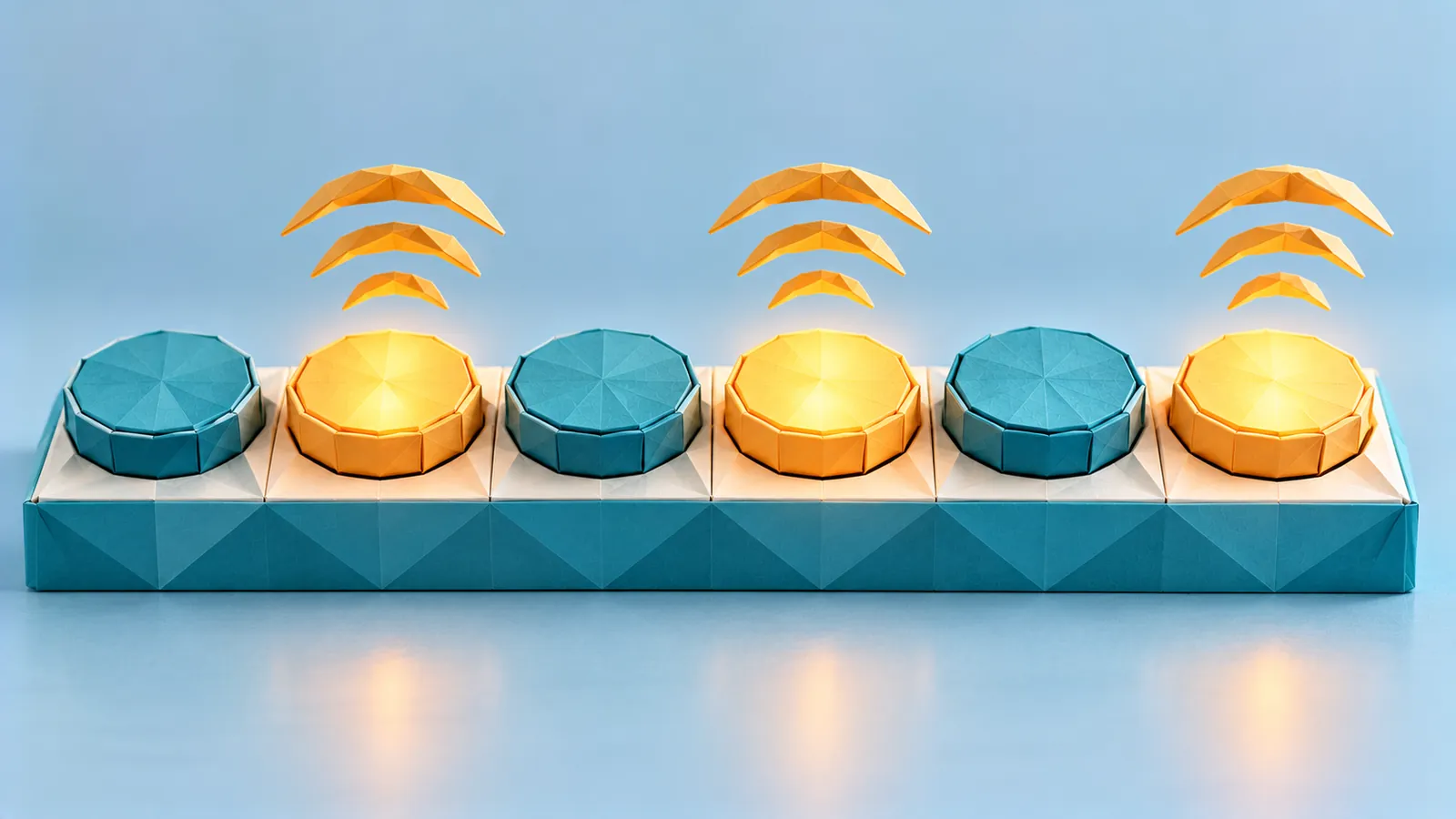
What the task uses
To copy a rhythm you need to hear it accurately, hold the pattern of gaps in memory for a moment, and then turn it into finely timed movements. Longer rhythms put more load on that short-term memory.
What practice can change
People get better at timing tasks with practice, and musical training is linked to more precise timing. Getting better at this test is normal. There is no evidence that it improves other skills by itself.
A worked example
Suppose the rhythm is four beats: beep, short gap, beep, long gap, beep, beep. Many people copy the order correctly but squash the long gap, because waiting feels uncomfortable. Try counting silently: one, and-two, three, four. Saying the rhythm in your head as words or a tune helps you keep the gaps the right length.
Common mistakes
Tapping too early is very common, especially on steady beats. Rushing long gaps and stretching short ones is another, because the brain tends to pull different gaps towards an average. Playing with the sound off makes the task much harder, since the beeps carry the timing.
Questions people ask
Do I need musical training? No. Musicians are often more precise, but anyone can improve at the task with practice.
Why does my device matter? Wireless headphones and some phones add a small audio delay, which can make you seem late. Wired headphones or speakers help.
Is this a hearing test? No. It measures timing on this task only.
Tips
Use headphones if you can, and a device that responds quickly. Count the beats in your head. Not medical advice: stop if you feel strained.
Sources
Not medical advice. Stop if you feel dizzy, nauseous or strained.