
Colour–Word: The Stroop Effect Explained
Why naming the ink colour of the word RED printed in blue is so hard, and what it says about attention.
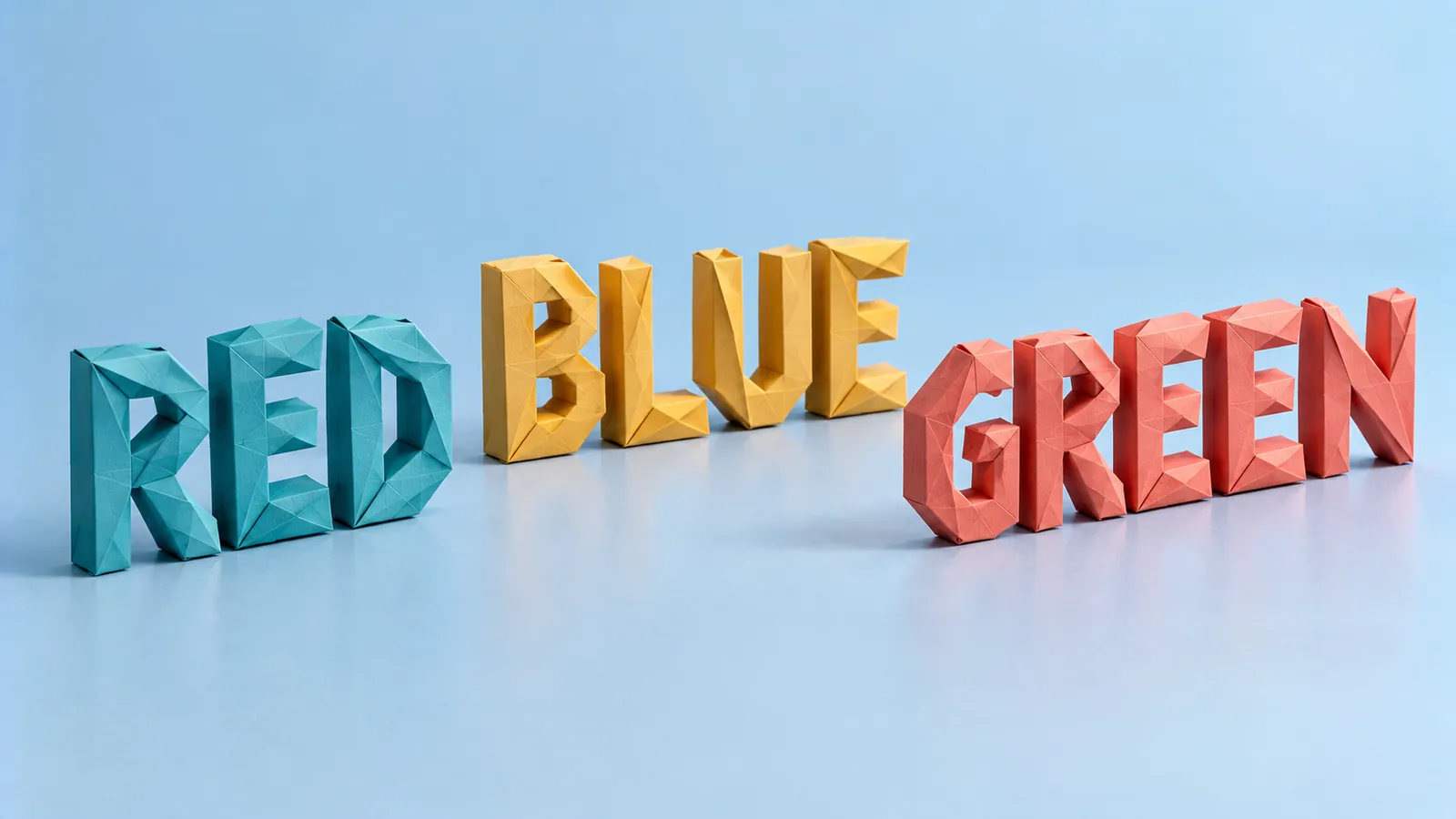
Look at the word RED printed in blue ink and say the colour. Most people slow down or nearly say "red". This small struggle is one of the most famous effects in psychology.
How to play
A colour word appears, printed in a colour. In levels 1 to 3, answer the INK colour, not the word. Level 4 switches: answer the WORD. Levels 5 and 6 repeat both rules with 5 colours. Click the colour button or press 1 to 5. To pass a level, get at least 80% right and keep a steady pace.
Where it comes from
In 1935, John Ridley Stroop published experiments showing that people take longer to name ink colours when the word spells a different colour. The reverse, reading the word and ignoring the ink, is much less affected.

Why it happens
For skilled readers, reading is close to automatic: you cannot help reading a word you look at. Naming a colour takes more deliberate effort. When the two clash, your brain has to hold back the automatic answer. This holding back is called inhibition, and the Stroop task is one of the standard ways to measure it.
What practice can change
People get faster at the Stroop task with practice. Improvements at the task are not evidence that self-control or focus improves in daily life.
A worked example
You see the word BLUE printed in red ink. In the ink-colour levels, the answer is red. Your brain reads BLUE automatically, so you have to hold that back. In the word levels, the rule flips: now the answer is blue, and the ink colour becomes the distraction.
Common mistakes
Reading the word out of habit in the ink levels is the classic mistake. Forgetting the rule after it switches is another, so glance at the rule label at the top. Going too fast can drop you below the 80% you need to pass a level.
Questions people ask
Why is the word level easier? Reading is close to automatic for skilled readers, so ignoring the ink is easier than ignoring the word.
Is this an ADHD test? No. It is not a diagnostic or medical test of any kind.
Does practice help? You will get faster at this task.
Tips
Blur your focus slightly so the colour stands out more than the letters. Not medical advice.
Sources
Not medical advice. Stop if you feel dizzy, nauseous or strained.