
Schulte Table: The Number Grid That Tests Visual Search
Why finding numbers in order is harder than it looks, and what a Schulte table actually measures.
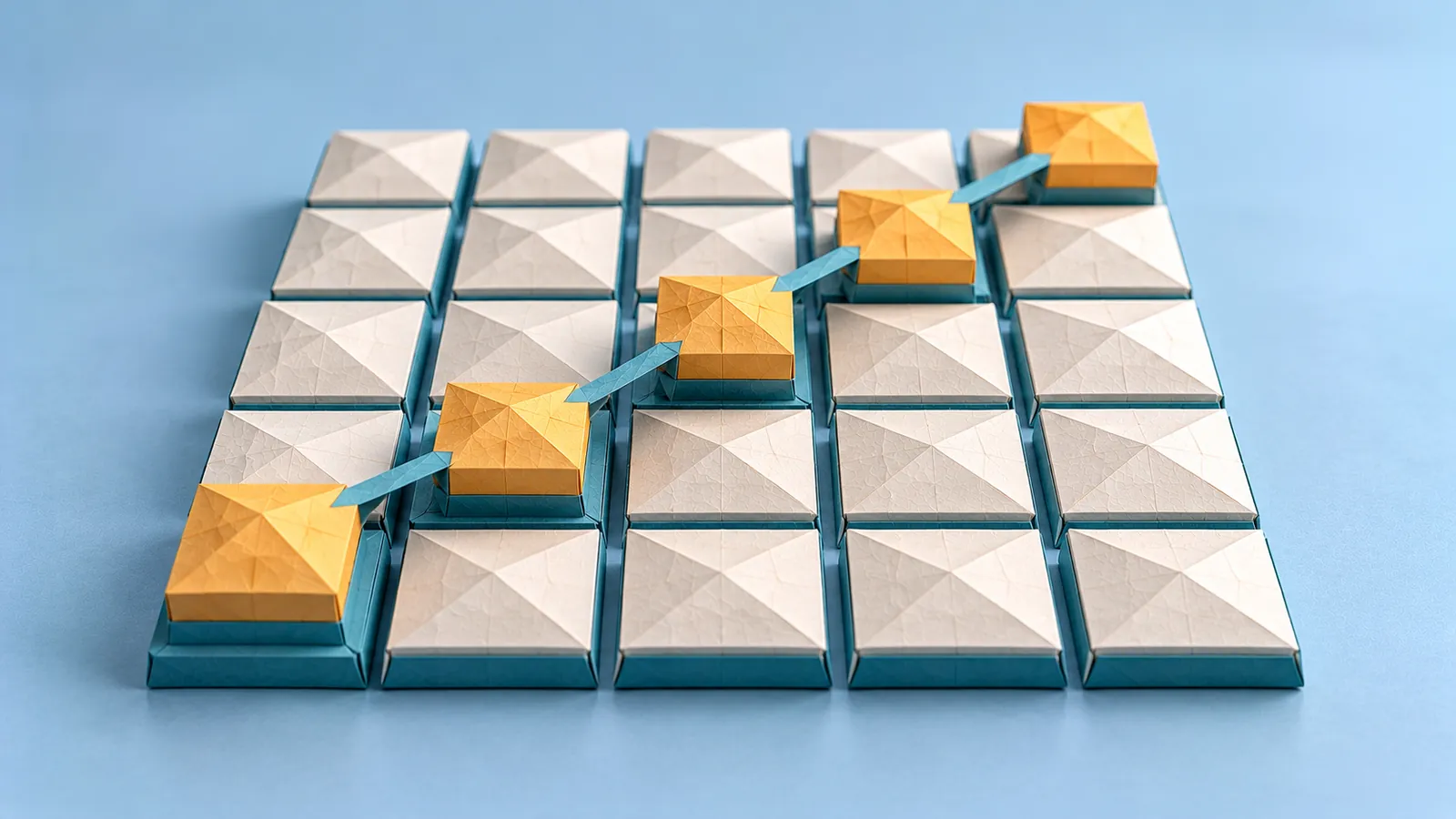
A Schulte table is a grid of numbers in random order. Your job is to find them in sequence: 1, then 2, then 3, as fast as you can. It is simple to explain and surprisingly tiring to do well.
How to play
Click 1, then 2, then 3 and so on. Level 1 has 9 numbers in 15 seconds; level 8 has 49 numbers in 90 seconds. A right click flashes green and a wrong click flashes red. Each level allows two wrong clicks; the third, or running out of time, ends the test.
Where it comes from
The tables are named after the German psychiatrist Walter Schulte and have long been used as an attention exercise. A close relative, the Trail Making Test, asks people to connect numbered circles in order and is one of the most used tests in neuropsychology.
What the task uses
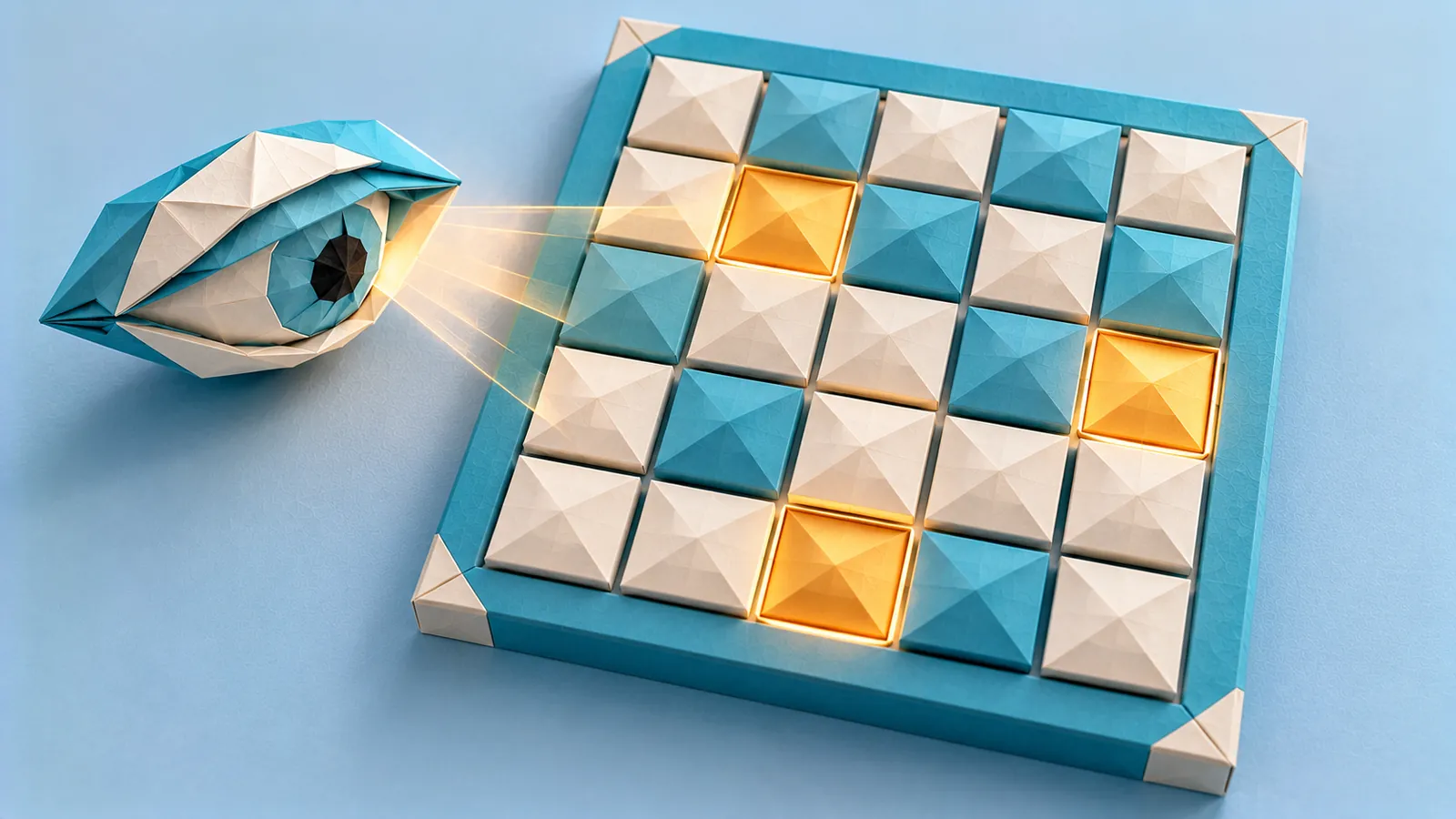
Visual search: scanning a busy display for one item. Attention: keeping the next number in mind while ignoring the rest. And speed of processing. Because found numbers do not stay marked, you also have to keep track of where you are.
What practice can change
You will get faster with practice, partly by learning better scanning strategies, such as looking at the middle of the grid and using your side vision. That improvement is real for this task. It has not been shown to improve reading speed or attention in daily life.
A worked example
On level 2 you might have 16 numbers and 20 seconds. Before clicking 1, take half a second to look at the whole grid. Keep your eyes near the centre and let your side vision pick up the next number, rather than reading row by row. If you lose your place, glance at the number you just clicked and look outwards from there.
Common mistakes
Reading the grid line by line is slow, because you re-read the same rows again and again. Clicking a number you think you saw, before checking, adds wrong clicks, and three of those end the level. Moving your head closer to the screen narrows how much you can see at once.
Questions people ask
Is this a speed reading exercise? It is often promoted that way, but there is no good evidence that Schulte tables improve reading speed.
Why do found numbers not stay marked? So you have to remember where you are, which adds a memory element.
What is a good time? Compare with your own times on the same level and device.
Tips
Keep your eyes near the centre and let the numbers come to you, rather than reading each row. Not medical advice: rest your eyes between rounds.
Sources
Not medical advice. Stop if you feel dizzy, nauseous or strained.